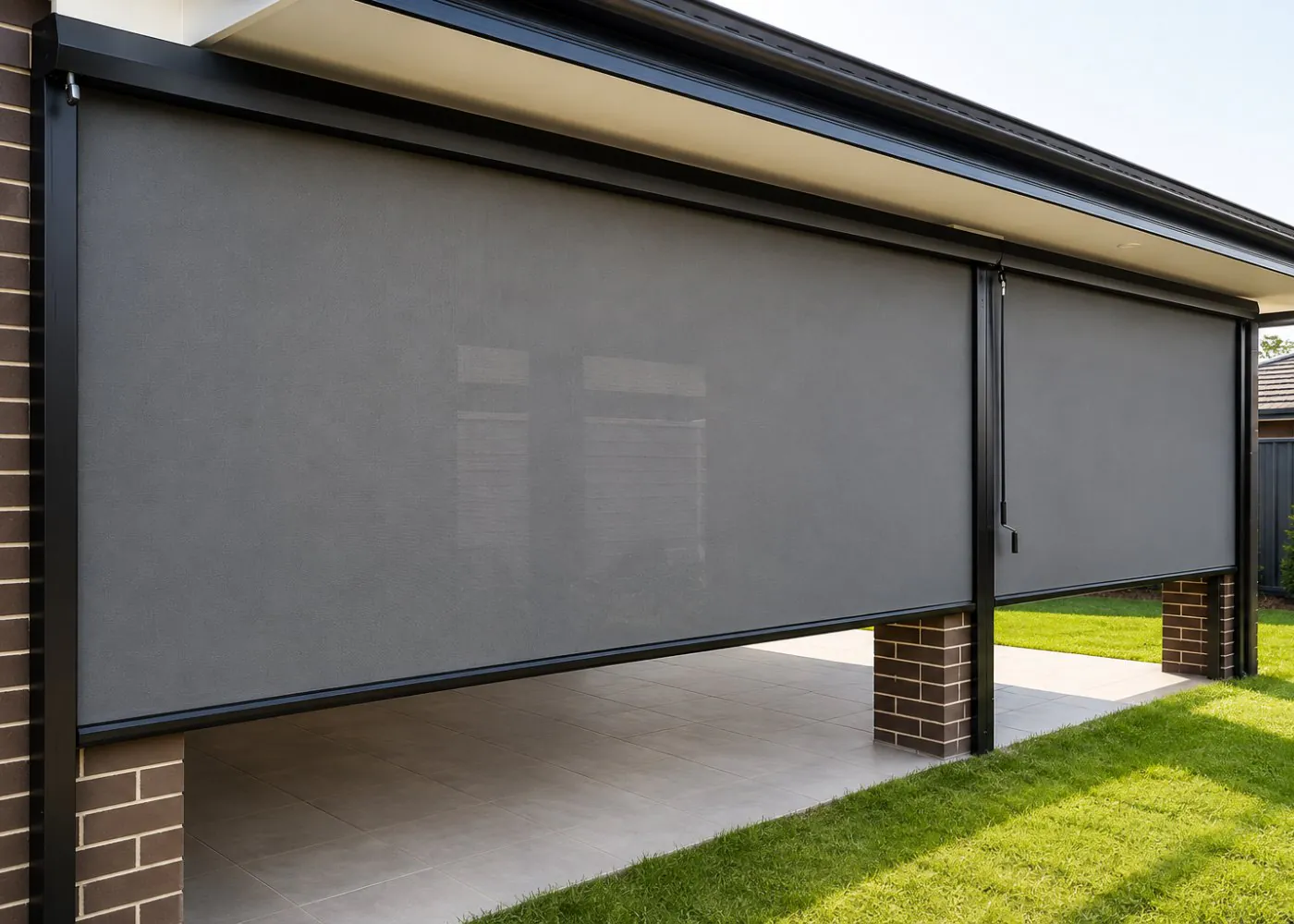
A DMV summer is hard on outdoor spaces: afternoon sun that makes a west-facing deck unusable, humidity that rots cheap fabric, and thunderstorms that arrive in minutes. Outdoor screens fix all three, and when they’re rolled up you’d barely know they were there.
Outdoor roller shades & drop blinds
The simplest version is a heavy-duty roller shade mounted outside: a fabric screen that drops from a slim housing under the roofline or pergola beam. On a zip-track system the fabric’s edges run inside side channels, so it stays taut and quiet in wind instead of flapping or blowing loose. Operate them with a crank or a motor.
Motorized retractable patio screens
Motorized screens run from a remote, a wall switch, an app or a schedule, and can be grouped so one button closes the whole porch. Add a wind sensor and they retract themselves when gusts pick up, which is the single upgrade that most decides whether a screen lasts three seasons or many more.
Exterior solar shades for west-facing windows
Interior blinds stop glare, but by then the sun is already inside the glass and heating the room. An exterior solar shade stops it outside. The fabric’s open weave keeps the view out during the day while cutting heat and glare, which makes a real difference on west-facing windows, glass doors and sunrooms.
Screened porch & pergola shades
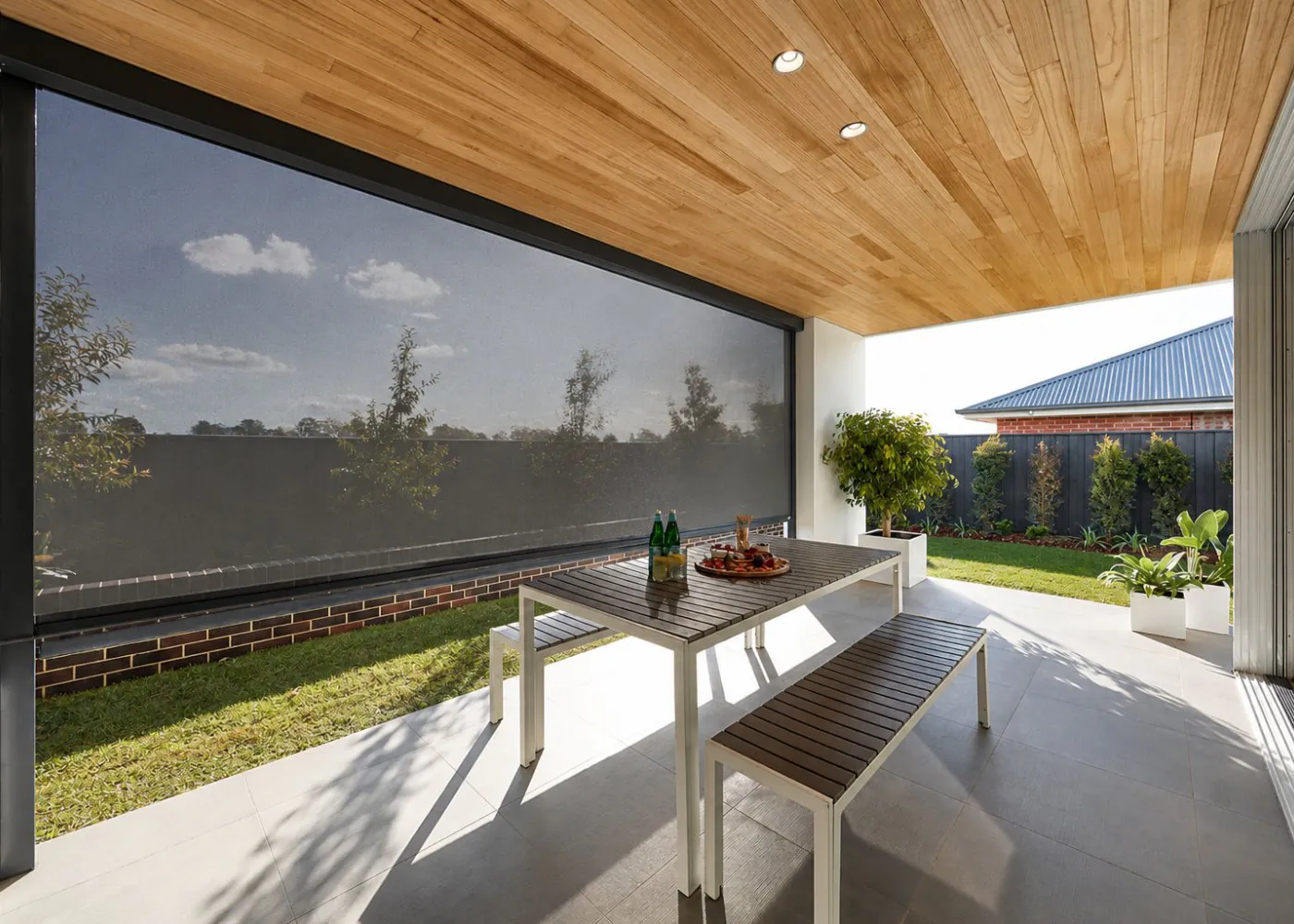
Screened porches, covered patios, pergolas, pool pavilions and roof decks each get the same treatment: one screen per opening, sized to the gap between posts. Lower them for afternoon sun or privacy from next door; raise them and the space looks exactly as it did.
What survives DMV humidity, UV and winter freeze
- Fabric: PVC-coated polyester or solution-dyed outdoor fabric that won’t fade or rot.
- Frame: powder-coated aluminum housing and tracks, with stainless steel fixings that won’t rust.
- Wind: zip-track edges, plus a wind sensor on motorized screens.
- Winter: roll them up before snow and ice so the fabric sits protected inside the housing.
HOAs and architectural review
Outdoor screens are fixed to the outside of the house, so many HOAs and condo boards want to see them before they go up. We’ll give you the specifications and color samples to include with your application.
Outdoor patio blinds cost in Maryland & Virginia
We price outdoor screens per opening. The housing, tracks, motor and controls cost about the same whether an opening is six feet wide or twelve, so a per-square-foot price understates what small openings really cost.
See outdoor prices in the calculator
Questions
What type of outdoor blinds last longest in DC, Maryland and Virginia weather?
Zip-track screens in PVC-coated polyester or solution-dyed fabric, on powder-coated aluminum with stainless fixings. The side channels hold the fabric so it can't flap itself apart in wind, and the materials don't rot or rust in humid summers.
Can I leave outdoor shades down in winter?
Raise them when snow or ice is forecast. Rolled up, the fabric sits inside its housing and is protected. A frozen screen left down can be damaged when it's operated.
How do I stop mold and mildew on outdoor shades?
Let them dry fully before rolling them up after rain, and rinse them with mild soap and water once or twice a season. Fabrics made for outdoor use resist mildew, but dirt left on them doesn't.
What happens in a thunderstorm?
A motorized screen with a wind sensor retracts itself when gusts pass a set limit, whether you're home or not. On manual screens, raise them when a storm is coming.
Can outdoor shades lower my cooling bills?
Shading the outside of the glass stops sunlight before it turns into heat inside, which is why exterior shades on west-facing windows and glass doors make such a noticeable difference in summer.
Does my HOA need to approve outdoor screens?
Often, yes, for anything fixed to the outside of the house. We'll give you the product specifications and color samples to submit with your application.